
COLISSION REGULATION
The duration of the course is 5 days.
We can also run courses for smaller groups of candidates at the request of clients.
Upon successful completion of the course, candidates will receive certificates.
The exercises are performed by professional and experienced lecturers with many years of maritime experience. The training can be performed during day or night and with different weather conditions, as we also have built lighthouses and wave simulators.
COLLISION REGULATION – COLREG.
We do not have a time limit for the training!
Therefore the exercises are performed until the candidates have mastered them, all according to the teaching topics of the International Regulations for Preventing Collisions at Sea – 1972, amended in 2018.
Application for
the COLREG. course
Introducing Our New Maritime Course – COLREG.
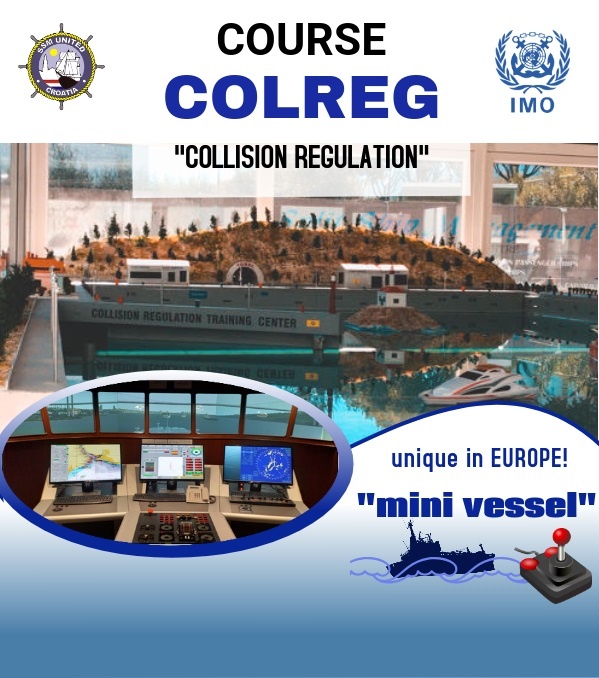
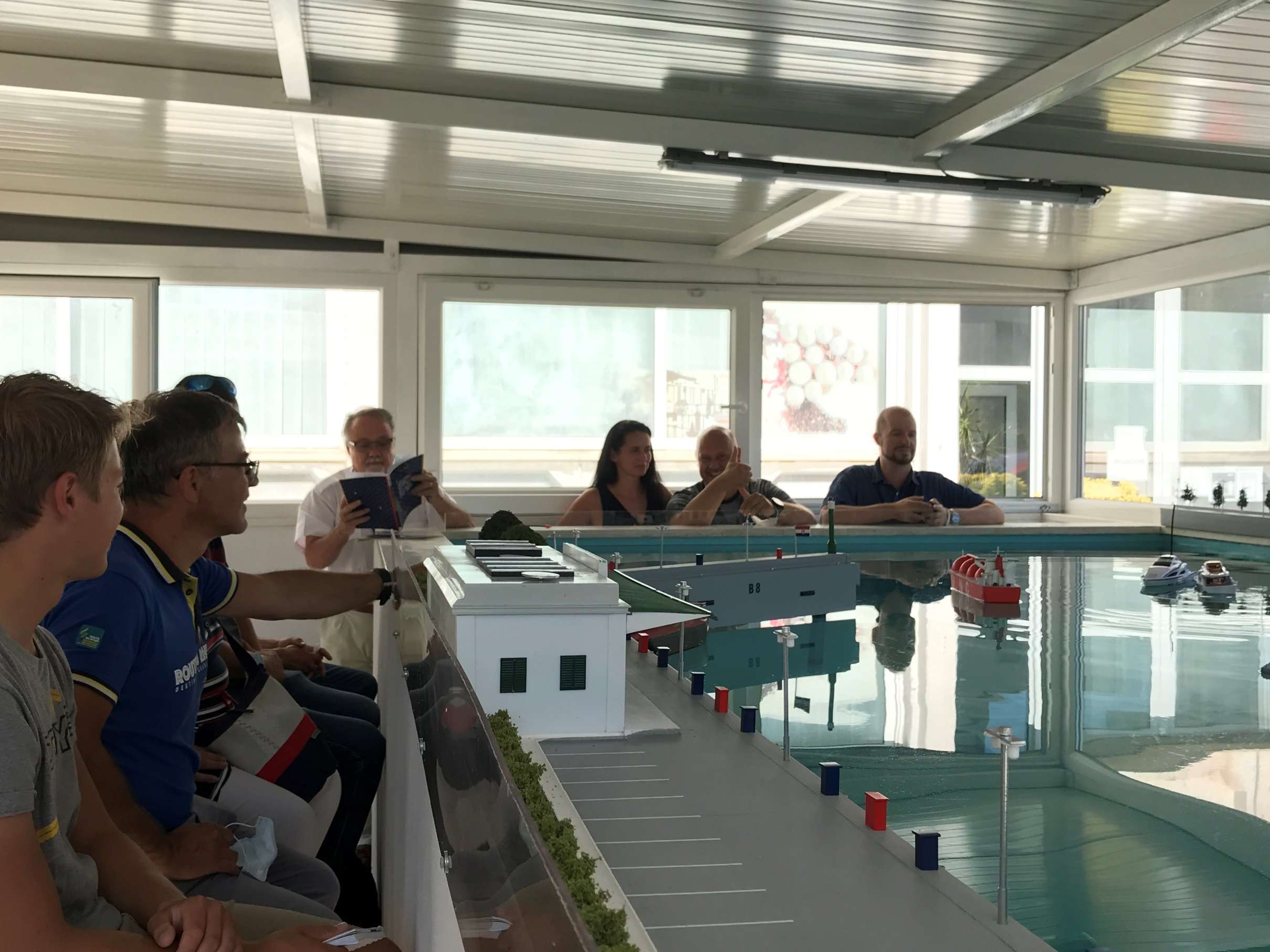
The course includes practical exercises on a polygon that is unique in Europe. The polygon consists of an indoor pool representing a harbour, and the exercise involves mastering the remote control of various scaled ship models. It has been scientifically shown that this develops coordination between brain and hand. Studies have shown that ship collisions are identified as one of the most common types of accidents at sea. Not knowing or not understanding the regulations is considered one of the main reasons why they are disregarded and/or not followed when trying to avoid a collision or incident at sea.
For this reason, SSM has developed this focused training programme that makes it easier to learn and understand the international regulations for preventing collisions and incidents at sea.
Importantly, this training programme also uses practical exercises with mini ship models in an indoor pool that we built as part of our training centre, featuring various types of scaled models ranging from fast craft to VLCC tankers.
Course objectives
Upon successful completion of the course, candidates receive our maritime training centre certificate.
The COLREG training programme covers 41 rules divided into six parts:
- Part A – General;
- Part B – Steering and Sailing Rules;
- Part C – Lights and Shapes;
- Part D – Sound and Light Signals;
- Part E – Exemptions;
- Part F – Verification of Compliance with the Provisions of the Convention.
Resources used during the training:
- theoretical knowledge of the instructor
- practical knowledge of the instructor
- bridge simulator
- video materials
- the use of a mini model of a ship’s polygon, unique in this part of Europe


